

<div class="sqs-video-wrapper" data-provider-name="YouTube" data-html="
“>
I have been meaning to write about “what I have been doing for online learning” since the fall.
This has proven difficult for many reasons, mostly that there is a lot I have been doing and it is all interconnected.
Generally, my planning and technology use has fallen into two categories.
Fortunately, I was invited to present at two music conferences this year, MMEA and TMEA, and each of my accepted sessions has serendipitously aligned with each of those areas.
This presentation in the video above is an overview of the asynchronous part. In other words, how I am keeping my virtual instruction focused on playing instruments solo, through student-facing tools like Noteflight, Soundtrap, Flipgrid, and a handful of iOS utility apps.
These strategies were developed while I was teaching virtually but they can just as easily be used in a hybrid or in-person teaching model. I would argue that they are just as valuable in either of those environments.
This presentation was first given at TMEA on Saturday, February 14th, 2021.
You can view the notes to this session here.

Are you coming to my TMEA session, Develop Performance Skills Remotely with Cloud Software today? It starts at 3 pm! Here are the session notes which include links to all of the software mentioned in the presentation.
Website – robbyburns.com
Blog – Music Ed Tech Talk (musicedtechtalk.com)
Subscribe to the Music Ed Tech Talk podcast – Apple Podcasts | Spotify | RSS
Subscribe to my email newsletter
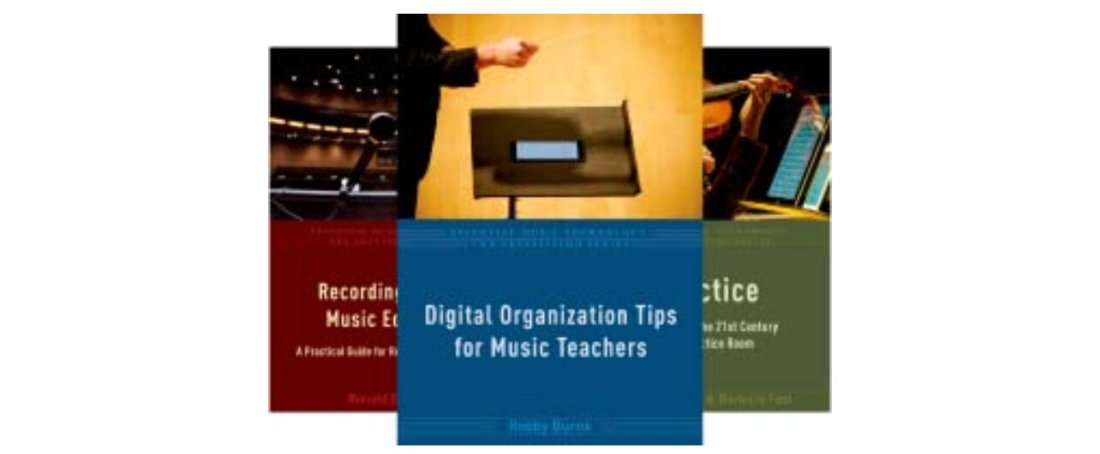
Buy my book – Digital Organization Tips for Music Teachers
Buy my Scale Play Along Tracks
<div class="
      image-block-outer-wrapper
      layout-caption-below
      design-layout-inline
      combination-animation-none
      individual-animation-none
      individual-text-animation-none
    ">


    <figure class="
          sqs-block-image-figure
          intrinsic
        " style="max-width:1634px">


      <div class="image-block-wrapper">
        <div class="sqs-image-shape-container-element


          has-aspect-ratio
        " style="position: relative;padding-bottom:65.60587310791016%;overflow: hidden">


            <img src="https://images.squarespace-cdn.com/content/v1/5595df9ce4b0ce9ff9ecd1a8/1613227875460-H8Q6TU7S6U09BSBNAWJV/Let%27s+Connect.001.jpeg" alt="Let's Connect.001.jpeg" width="1634" height="1072" style="display:block;object-fit: cover;width: 100%;height: 100%;object-position: 50% 50%" loading="lazy">

        </div>
      </div>


    </figure>


</div>
Twitter
YouTube
Instagram
Soundcloud
Facebook
Pinterest
Are you going to be at the Texas Music Educators Association conference next week? If so, I hope to see you there! I am presenting a session and appearing on a panel.
Session description: If you are teaching in person, remotely, or hybrid, learn about great software you can use to reinforce the growth of perfor- mance skills among your students! Explore how students can use Noteflight Learn, Soundtrap, Flipgrid, and Google Docs to demonstrate technical skills, compose music, respond to music, multitrack-record themselves playing ensemble literature, col- laborate in chamber ensembles synchronously, and more.

My book, Digital Organization Tips for Music Teachers is part of the Prestissimo Series by Oxford University Press. Richard McCready, series editor, will be hosting a session featuring all of the authors in the series and the editors at OUP responsible for making it happen.
Each author will talk for a few minutes about their book and give one tip that a teacher could take immediately into the classroom the following day. I will be talking about organizing digital score libraries and managing your email inbox.
Session description:
The Prestissimo “Essential Music Technology” series, published by Oxford University Press, is a collection of handy books containing tips and advice on how to incorporate technology into your music teaching situation easily. In this session, authors who have written books in the series will share their best tips from the books with you. This round-table style discussion will be led by series editor Richard McCready (TIME Mike Kovins Teacher of the Year 2013). There will also be a prize drawing at the session for free copies of some of the Prestissimo series books.
List of Panelists:
Robby Burns is a band director and general music teacher at Ellicott Mills Middle School in Maryland, where he is also an active performing percussionist and private instructor. He is the author of “Digital Organization Tips for Music Teachers” and hosts the blog and podcast Music Ed Tech Talk.
Michelle Chen is Senior Editor of Music Education and Performance at Oxford University Press. She joined OUP in 2020 and previously held positions at Palgrave Macmillan and Bloomsbury Publishing.
Dr. Rick Dammers is the Dean of the College of Performing Arts and Professor of Music Education at Rowan University. He is the co-author of the book “Practical Music Education Technology”, is the author of the technology chapter in the “Oxford Handbook of Preservice Music Teacher Education in the United States” and is the recipient of the 2010 TI:ME Mike Kovins Teacher of the Year Award.
Catherine Dwinal is the educational technology specialist working for QuaverEd and TI:ME’s 2014 Mike Kovins Teacher of the Year. Catherine is the author of “Interactive Visual Ideas for Musical Classroom Activities” and has the pleasure of working with thousands of educators from all over the country helping them to integrate technology into the classroom.
Norm Hirschy is Executive Editor for Books on Music at Oxford University Press. Prior to joining OUP in 2004, he studied at The College of Wooster and at The Ohio State University.
Ronald E. Kearns is a retired instrumental music teacher. He is the author of “Recording Tips for Music Educators”, as well as Quick Reference for Band Directors” and “Quick Reference for Band Directors Who Teach Orchestra” (NAfME/RLE Publishing).
Marjorie LoPresti is the US Digital Content Manager for MusicFirst, Adjunct Professor of Music Education Technology at Rutgers University, and co-author of “Practical Music Education Technology”. She was the recipient of the 2016 TI:ME Mike Kovins Teacher of the Year Award.
Peter Perry is the author of “Technology Tips for Ensemble Teachers.” He received the Brent Cannon Music Education Alumni Achievement Award from Kappa Kappa Psi, recognizing outstanding contributions to secondary music education; the Presidential Scholar Teacher Award; and a Japan Fulbright fellowship. He is in his 25th year as Instrumental Music Director at Richard Montgomery High School in Rockville, Maryland and is on the music education faculty of the Catholic University of America in Washington D.C.

I am thrilled that Flat for Education is sponsoring Music Ed Tech Talk this month. Their product is a breath of fresh air in a landscape of frustrating education software. More on that in a moment, but first, their own words:
Flat for Education offers music educators and their students the most affordable cloud-based music notation software on the market. Empowering teachers to create playful and engaging music activities, creations, assessments on any device at any time.
The platform integrates with every well-known learning management system available: Google Classroom, Microsoft 365, Canvas, Schoology, and MusicFirst to name a few. Everything will be synchronized with your existing setup to avoid any time loss.
Flat for Education offers an advanced system of assignments allowing you to create playful and stunning music activities with your students.
Create a template for all your students to start working from, or simplify the toolbar to have them only working with eighth and quarter notes. The only limit is your imagination.
Save a lot of time by generating worksheets and quizzes in just a few clicks for your students to practice music theory.
Finally, band directors and choirs conductors can have their students directly recording their performance from home for review.
Whether you are teaching remotely or in-person, Flat for Education will support you in creating playful and engaging music activities in no time. Try it free for 90 days on flat.io/edu.
Since my school district moved to online teaching in March, I have had the opportunity to test a greater variety of web-based music teaching software. Much of this I have been able to use practically, with kids using the tools on the other end, and in combination with our district’s learning management software.
<div class="
      image-block-outer-wrapper
      layout-caption-below
      design-layout-inline
      combination-animation-none
      individual-animation-none
      individual-text-animation-none
    ">


    <figure class="
          sqs-block-image-figure
          intrinsic
        " style="max-width:1268px">


      <div class="image-block-wrapper">
        <div class="sqs-image-shape-container-element


          has-aspect-ratio
        " style="position: relative;padding-bottom:44.3217658996582%;overflow: hidden">


            <img src="https://images.squarespace-cdn.com/content/v1/5595df9ce4b0ce9ff9ecd1a8/1602702830462-33ZD2IZ7BO95J6TPM917/CleanShot+2020-10-14+at+15.10.04.png" alt="The user interface of Flat for Education is really simple and clean. It is immediately easy for a teacher or student to find the features they are looking for and every click feels responsive and fast!" width="1268" height="562" style="display:block;object-fit: cover;width: 100%;height: 100%;object-position: 50% 50%" loading="lazy">

        </div>
      </div>


      <figcaption class="image-caption-wrapper">
        <div class="image-caption"><p class="">The user interface of Flat for Education is really simple and clean. It is immediately easy for a teacher or student to find the features they are looking for and every click feels responsive and fast!</p></div>
      </figcaption>


    </figure>


</div>
I will put this simply: a lot of education technology is buggy, unintuitive, and difficult to decipher. Music technology is no exception. One thing I really appreciate about Flat for Education is the design. It is simple, beautiful, and straightforward.
I am not just referring to the graphical design of Flat for Education. I am referring to the experience of using it. The onboarding could not be more straightforward or direct. Menus in the score editor are simply laid out, buttons respond quickly, note heads drag smoothly, and nothing takes too many clicks to accomplish. I did a lot of testing before writing this post and found that every feature I tried was easy and reliable. Even something niche like batch uploading numerous XML files from Dorico into my Flat for Education library was quick and rock-solid.
<div class="
      image-block-outer-wrapper
      layout-caption-below
      design-layout-inline
      combination-animation-none
      individual-animation-none
      individual-text-animation-none
    ">


    <figure class="
          sqs-block-image-figure
          intrinsic
        " style="max-width:1273px">


      <div class="image-block-wrapper">
        <div class="sqs-image-shape-container-element


          has-aspect-ratio
        " style="position: relative;padding-bottom:43.047916412353516%;overflow: hidden">


            <img src="https://images.squarespace-cdn.com/content/v1/5595df9ce4b0ce9ff9ecd1a8/1602702896122-8VX3O6IBP5UJG8Z4ZIWS/CleanShot+2020-10-14+at+15.09.36.png" alt="Another example of how clean and easy to understand the Flat for Education experience is. Batch uploading numerous files I created in Dorico into my Flat Score Library happened in a flash before my eyes!" width="1273" height="548" style="display:block;object-fit: cover;width: 100%;height: 100%;object-position: 50% 50%" loading="lazy">

        </div>
      </div>


      <figcaption class="image-caption-wrapper">
        <div class="image-caption"><p class="">Another example of how clean and easy to understand the Flat for Education experience is. Batch uploading numerous files I created in Dorico into my Flat Score Library happened in a flash before my eyes!</p></div>
      </figcaption>


    </figure>


</div>
As frustrating as education tech often is for the teacher, we know that it is infinitely harder for our students. If you are teaching in person, online, or hybrid, technology can engage and empower students or frustrate them so much they want to give up. But when the technology is as easy as Flat for Education, the software gets out of the way, and the learning content comes to the center.
I think it is important also to highlight that these scores are collaborative and cross-platform. You might be thinking this is obvious considering it runs in a web browser, but I point it out here because so much of the growth in web-first teaching tools is happening at the expense of our students who are depending on mobile devices like cell phones and tablets. Flat is built not only to run on any browser, but any computing platform. Students can easily work on the same documents together if they are running Chrome on a Chromebook, iOS, or whatever platform is available to them. And it’s easy too!
It is so impressive to me that Flat for Education has prioritized the user experience to this level of detail on top of building an excellent score editor and learning environment. Be sure to check out the 90-day free trial if you are looking for a teaching platform built on top of a great score editor, or simply for a tool that empowers your students to interact with musical notation in a freeing way. Again, my thanks to Flat for Education for sponsoring this month of Music Ed Tech Talk.
Thanks to my sponsor this month, MusicFirst
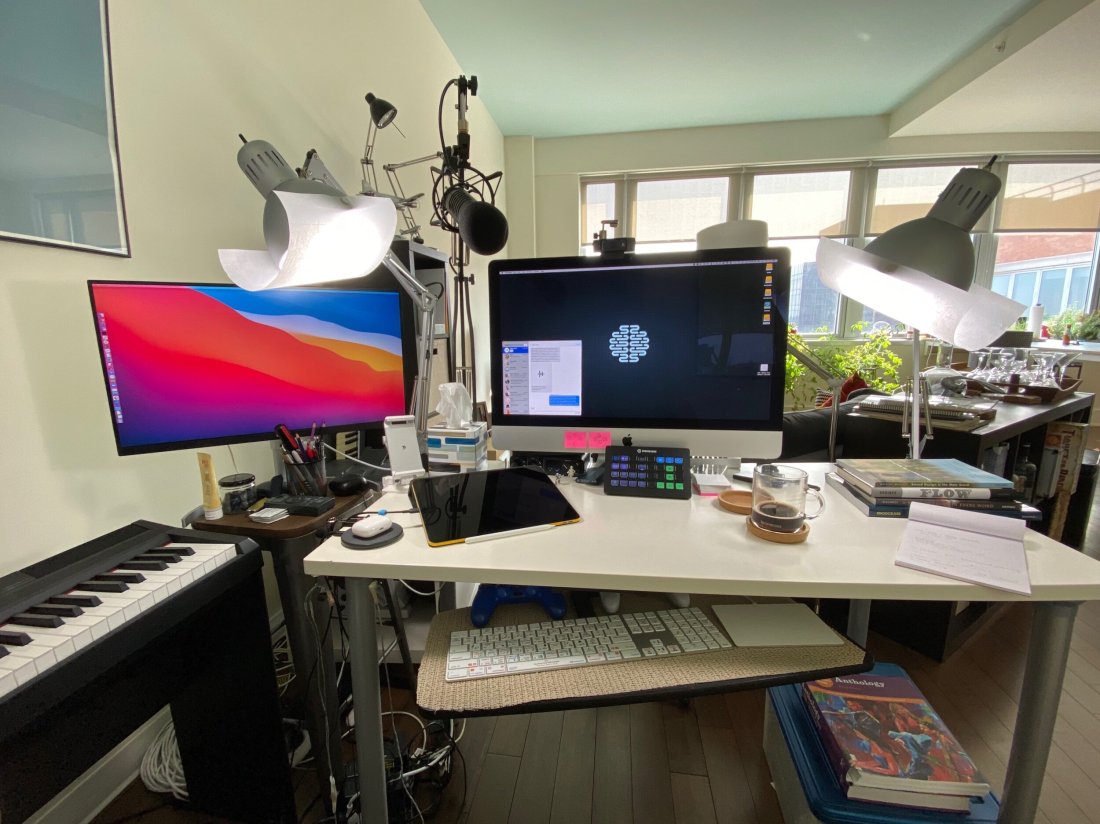
David MacDonald returns to the show to talk about the hardware and software in our virtual teaching setups. Then we speculate about touchscreen Macs and consider how Apple’s recent App Store policies might impact the future of creative professional software on iOS.
Topics include:
Where to Find Us:
Robby – Twitter | Blog | Book
David MacDonald – Twitter | Website | Blog
Please don’t forget to rate the show and share it with others!
Subscribe to the Podcast in…
Apple Podcasts | Overcast | Castro | Spotify | RSS
Today’s episode is sponsored by MusicFirst:
MusicFirst offers music educators and their students easy-to-use, affordable, cloud-based software that enables music learning, creation, assessment, sharing, and exploration on any device, anywhere, at any time.
MusicFirst Classroom is the only learning management system designed specifically for K-12 music education. It combines the flexibility of an LMS with engaging content and powerful software integrations to help manage your students’ progress, make lesson plans, and create assignments.
And for younger students, MusicFirst Junior is the perfect online system for teaching elementary general music. It includes a comprehensive K-5 curriculum, hundreds of lessons & songs, and kid-friendly graphics to making learning and creating music fun!
Whether you’re teaching remotely, in-person, or in a blended learning environment, MusicFirst will work with you to find a solution that fits your program’s unique needs. Try it free for 30 days at musicfirst.com.
<div class="
      image-block-outer-wrapper
      layout-caption-below
      design-layout-inline
      combination-animation-none
      individual-animation-none
      individual-text-animation-none
    ">


    <figure class="
          sqs-block-image-figure
          intrinsic
        " style="max-width:2500px">


      <div class="image-block-wrapper">
        <div class="sqs-image-shape-container-element


          has-aspect-ratio
        " style="position: relative;padding-bottom:74.95999908447266%;overflow: hidden">


            <img src="https://images.squarespace-cdn.com/content/v1/5595df9ce4b0ce9ff9ecd1a8/1600038818677-9KFU4NAEUS7MPSAS5S61/IMG_3003.jpeg" alt="David’s teaching setup." width="2500" height="1874" style="display:block;object-fit: cover;width: 100%;height: 100%;object-position: 50% 50%" loading="lazy">

        </div>
      </div>


      <figcaption class="image-caption-wrapper">
        <div class="image-caption"><p class="">David’s teaching setup.</p></div>
      </figcaption>


    </figure>


</div>


<div class="
      image-block-outer-wrapper
      layout-caption-below
      design-layout-inline
      combination-animation-none
      individual-animation-none
      individual-text-animation-none
    ">


    <figure class="
          sqs-block-image-figure
          intrinsic
        " style="max-width:2500px">


      <div class="image-block-wrapper">
        <div class="sqs-image-shape-container-element


          has-aspect-ratio
        " style="position: relative;padding-bottom:75%;overflow: hidden">


            <img src="https://images.squarespace-cdn.com/content/v1/5595df9ce4b0ce9ff9ecd1a8/1600038852982-OD6Y5XFUFRAL1TR2PPJD/A7067C72-D117-473F-A9FA-D3938A9C1A5E.jpeg" alt="My teaching setup." width="2500" height="1875" style="display:block;object-fit: cover;width: 100%;height: 100%;object-position: 50% 50%" loading="lazy">

        </div>
      </div>


      <figcaption class="image-caption-wrapper">
        <div class="image-caption"><p class="">My teaching setup.</p></div>
      </figcaption>


    </figure>


</div>


<div class="
      image-block-outer-wrapper
      layout-caption-below
      design-layout-inline
      combination-animation-none
      individual-animation-none
      individual-text-animation-none
    ">


    <figure class="
          sqs-block-image-figure
          intrinsic
        " style="max-width:2500px">


      <div class="image-block-wrapper">
        <div class="sqs-image-shape-container-element


          has-aspect-ratio
        " style="position: relative;padding-bottom:75%;overflow: hidden">


            <img src="https://images.squarespace-cdn.com/content/v1/5595df9ce4b0ce9ff9ecd1a8/1600038981679-Y8MXKP63LULXCLM4Y5I3/IMG_2823.jpeg" alt="…From far away." width="2500" height="1875" style="display:block;object-fit: cover;width: 100%;height: 100%;object-position: 50% 50%" loading="lazy">

        </div>
      </div>


      <figcaption class="image-caption-wrapper">
        <div class="image-caption"><p class="">…From far away. </p></div>
      </figcaption>


    </figure>


</div>
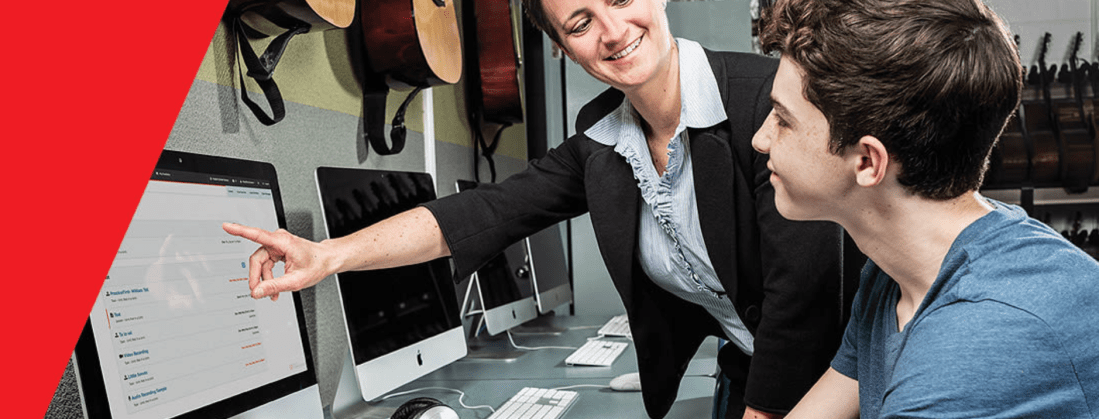
I am thrilled that Music Ed Tech Talk is sponsored by MusicFirst this month. What is MusicFirst? In their own words:
MusicFirst offers music educators and their students easy-to-use, affordable, cloud-based software that enables music learning, creation, assessment, sharing, and exploration on any device, anywhere, at any time.
MusicFirst Classroom is the only learning management system designed specifically for K-12 music education. It combines the flexibility of an LMS with engaging content and powerful software integrations to help manage your students’ progress, make lesson plans, and create assignments.
And for younger students, MusicFirst Junior is the perfect online system for teaching elementary general music. It includes a comprehensive K-5 curriculum, hundreds of lessons & songs, and kid-friendly graphics to making learning and creating music fun!
Whether you’re teaching remotely, in-person, or in a blended learning environment, MusicFirst will work with you to find a solution that fits your program’s unique needs. Try it free for 30 days at musicfirst.com.
This past school year, I piloted our district’s General Music II class. It marks the first time in our school system where a middle school level music class has built off of a prior year of skill development. Along with this development, our school’s Mac lab began to get phased out and replaced with Chromebooks.
I decided to invest in MusicFirst, a holistic, all-in-one, solution for teaching music with computers.
A small grant covered the cost of some low-end MIDI controllers, and my 8th graders were off! MusicFirst, and the integrated third party apps, blew open the doors. Suddenly we could compose notation with the clarity and creativity that Noteflight offers. Soundtrap, one of the digital audio workstations that you can bundle with a MusicFirst subscription, stores its content in the cloud, meaning students were never limited to the instruments or loops that happened to be installed on the Mac they sat down at that day.
To top it off, we were able to apply our piano skill from earlier in the semester to record our original parts into the computers. The fact that this software runs on the web means students can work on projects at home. It’s fantastic!
In March, when schools shifted to an online model, MusicFirst suddenly increased in value. I honestly don’t know how I would have taught my music class without it. Soundtrap kept students engaged in creating music once every week and collaborating on projects.
MusicFirst’s content library is massive. You can download an entire course-worth of units and lesson plans from dozens of pre-built classes.
In my early curiosity, I downloaded MusicFirst’s “Middle School Music Technology” class to my account and invited all of my students to it. I was able to easily drag and drop lessons and units from this course into dates on a calendar and have them appear as tasks to students. These lesson plans include clear instructions, engaging media, and assignments that link directly out to whatever software is required to get the task done.
For example, we spent some time learning the blues last spring. There is a unit in the pre-made music tech course that teaches students some blues basics. It starts with a lesson plan that has a pre-made playlist featuring artists like B. B. King. After listening to some recorded examples, it links students to a discussion task, where they can comment about the stylistic features of the music. Next, students move on to a lesson that explains the blues scale and links directly to a Soundtrap project, where the are tasked to record an improvisation using the notes of the blues scale. Saving their work in Soundtrap automatically saves it to the assignment in MusicFirst, where I can review and grade them all in the same place.
The pre-made content is a life saver if are teaching out of your content area and are feeling overwhelmed. Even if you are not, the content will speed things up for you. (Aggregating Spotify playlists, images, and instructions into a meaningfully structured lesson takes time, even if the ideas are already in your head!).
The course content is also fully customizable. In the blues example above, I wanted the improvisation assignment in Soundtrap to have a 12 bar bass line and shuffle beat pre-recorded, so that students felt like they were playing along to something. I was able to accomplish this, and saved a lot of time due to the instructions and embedded media having already been curated.
Give MusicFirst a try. It is such a comprehensive offering, that I am sure it can enhance your teaching! Click herefor more details.
<div class="
      image-block-outer-wrapper
      layout-caption-below
      design-layout-inline
      combination-animation-none
      individual-animation-none
      individual-text-animation-none
    ">


    <figure class="
          sqs-block-image-figure
          intrinsic
        " style="max-width:925px">


      <div class="image-block-wrapper">
        <div class="sqs-image-shape-container-element


          has-aspect-ratio
        " style="position: relative;padding-bottom:15.243242263793945%;overflow: hidden">


            <img src="https://images.squarespace-cdn.com/content/v1/5595df9ce4b0ce9ff9ecd1a8/1599398242244-DSIL1YW9YVE14T0RSKEX/MusicFirst+Logo+black+for+blog+post.png" alt="MusicFirst Logo black for blog post.png" width="925" height="141" style="display:block;object-fit: cover;width: 100%;height: 100%;object-position: 50% 50%" loading="lazy">

        </div>
      </div>


    </figure>


</div>
Elementary music educator, Amy Burns, joins the show! We talk about Seesaw, using tech in the elementary general music classroom, and her new book: Using Technology with Elementary Music Approaches!!!
Stuff Amy is doing:
App of the Week:
Robby – SoundSource by Rogue Amoeba
Amy – Tripple Feature! – Timestamp Camera | MixCam app | Focos
Album of the Week:
Robby – Clear Line | Jacob Garchik
Amy – In the Heights | Lin-Manuel Miranda
Where to Find Us:
Robby – Twitter | Blog | Book
Amy – Twitter | Website
Please don’t forget to rate the show and share it with others!
Subscribe to the Podcast in…
Apple Podcasts | Overcast | Castro | Spotify | RSS
John Mlynczak returns to the show to discuss Noteflight’s new integration with Sound Check and offers advice to educators about teaching online this fall, and what we can learn from it.
App of the Week:
Robby – Kindle/Audible |
John – TikTok
Album of the Week:
Robby – Igor Levit – Beethoven Piano Sonatas |
John – Hamilton on Disney+
Where to Find Us:
Robby – Twitter | Blog | Book |
John – Twitter
Subscribe to the Podcast in…
Apple Podcasts | Overcast | Castro | Spotify | RSS
Web based music notation editor, Noteflight, recently launched a new feature called SoundCheck. It works with Noteflight Learn to add the same pitch and rhythm analysis to your assignments that services like Smartmusic and PracticeFirst are capable of.
My understanding is that it works like this: Noteflight is still a standalone service for writing notation, publishing it, and sharing it within the Noteflight community. Noteflight Learn is the service that can be added to your Noteflight subscription which gives you access to content libraries and some LMS features like managing students and assigning work. SoundCheck is a third offering that can be added to your existing Noteflight Learn subscription, that adds the practice and analysis tools to your assignments.
It seems like it should be very easy to make assignments out of your Noteflight scores, which can be imported via the XML format.
John Mlynczak, Managing Director of Noteflight, is coming on the podcast this week to discuss more. Stay tuned.
SoundCheck Check One Two – Noteflight Notes:
We are so excited to announce our partnership with MatchMySound™ technology to bring SoundCheck™ to Noteflight! This proven solution for performance assessment will be available for use with any Noteflight score, and provide ratings and feedback for pitch, rhythm, and intonation – which can be used for assessment.
All Noteflight scores will be available in SoundCheck with just the click of a button. All current Noteflight Learn integrations with Google Classroom and LTI tools such as Canvas, Schoology, Moodle, etc, will still be supported for creating and turning in SoundCheck assignments. We are actively integrating this feature now and are committed to having the first version available for use in June.

There are a few things that would be helpful to know about my music teaching philosophy before reading this post.
1. I believe that tone production, intonation, balance and blend are central to teaching performing musicians. I prioritize them much higher than fingering technique, rhythmic precision, and even reading comprehension.
2. The way I structure my band classes starts with, is focused on, and always revisits those core ideas.
3. I have accumulated a vast variety of tools and teaching strategies to meet my goals of having superior tone quality, intonation, balance and blend. One of the most essential tools I use is the Tonal Energy Tuning app.
What is Tonal Energy? A hyper charged, power-user app for musicians that has many advanced features, including…
– Tuning drones that can be triggered polyphonically
– Feedback as to how in tune a performer is, which includes a delightful happy face to depict good or questionable intonation
– Drones and feedback can be adjusted to different temperaments
– A metronome (with more features than nearly any alternative on the App Store) that can be used separately or at the same time as the tuning drones
– Analysis tools that depict amplitude and intonation on an easy to read visual graph
– Recording and play back practice tools for musicians to listen back to their performance
– Automated metronome pre-sets that can be sequenced
See the video below. I will first depict the tuner playing a Bb drone, then I will show how it can model a Bb major triad all at once. Then I will turn the tuner to just intonation mode, and you will hear that the third and fifth of the chord are appropriately adjusted so that they are in tune with the Bb root. Next, the video will demonstrate how the metronome can be used in combination with these drones.
Imagine now that a student is playing a scale along with Tonal Energy. By leaving the tuner in just intonation, and centering around the key area of Bb major, every note of the scale that I touch will resonate accurately with the Bb, giving the student an accurate reference to blend into.
Much of music is made up of scales. For a student to learn how to most accurately tune different intervals and chords, I have the drone running in the background during most of my teaching in whatever key area we are working in. I then move my finger to the correct notes of the melody to model and reinforce what good intonation would sound like. See below for an excerpt of a song my beginning students might play.
In the video below, watch as I play this song by dragging my finger along to the melody. This happens with a metronome to reinforce the beat. I like that TE has the option to speak counts out loud. In my experience, this really reinforces a concept of strong beats, weak beats, where in the measure the performer is. Other tuning apps have the counting feature as an option, but the sounds in TE sound more natural and less computerized.
As you can imagine, I am doing a lot of dragging my finger along while students play for me. This gets tedious. I also want my students to be able to hear these pitch relationships when they practice, so I have begun recording them into play along tracks. How do I do this?
In the iOS GarageBand app, audio input is usually performed using either software instruments or by recording audio directly into the device with the microphone. But what you might not know is that you can also create a track that is based on the audio output of a third party audio app. If you have ever used a DAW, think of Inter-App Audio Apps and Audio Extensions like plugins. Once launched, you are kicked into a third party interface (much like using a reverb plugin from Waves or a synthesizer from Native Instruments) which then adds to or alters the sound of your overall project. In a more recent GarageBand update, Apple categorizes Inter-App Audio and Audio Extensions under the External option when you create a new track.
Audio Extensions are effects that alter your tracks like reverbs and EQs, while Inter-App Audio captures the audio of a third party app and records it into its own track in GarageBand. You can browse the App-Store for Audio Extensions that work with GarageBand.
<div class="
      image-block-outer-wrapper
      layout-caption-below
      design-layout-inline
      combination-animation-none
      individual-animation-none
      individual-text-animation-none
    ">


    <figure class="
          sqs-block-image-figure
          intrinsic
        " style="max-width:2500px">


      <div class="image-block-wrapper">
        <div class="sqs-image-shape-container-element


          has-aspect-ratio
        " style="position: relative;padding-bottom:74.95999908447266%;overflow: hidden">


            <img src="https://images.squarespace-cdn.com/content/v1/5595df9ce4b0ce9ff9ecd1a8/1563922037765-9OB6ABPACPM3FBRCRE6M/public.jpeg" alt="public.jpeg" width="2500" height="1874" style="display:block;object-fit: cover;width: 100%;height: 100%;object-position: 50% 50%" loading="lazy">

        </div>
      </div>


    </figure>


</div>
Watch in the video below as I set up an Inter-App Audio App track with Tonal Energy. What I am going to do next is press record, and record my justly in tune play along of Lightly Row into my GarageBand project. I will do this using the euphonium sound. The euphonium drone is one of the roundest, darkest, and fullest sounds, while also containing a great range, so it is effective for most instruments to play along to while also modeling a rich, full, resonant sound.
In this video, you can really hear how sloppy the transition from one pitch to the next is when I drag my finger. Notice also that I did not play repeat notes. It is difficult to play the same pitch twice in a row without Tonal Energy changing itself to that key area. One way around these challenges this is to set up a portable MIDI keyboard with Tonal Energy. The one I have settled in is the CME X-Key with Bluetooth.
It has a sleek look, is very small, and has low key travel. It has buttons for pitch shifting and octave jumping. And Tonal Energy adapts to it in just intonation mode! Watch in the video below. As I change which chord I am playing, TE automatically snaps the third and fifth of each triad in tune, relative to the root. For my Lightly Row performance, I can now hold a Bb drone on in one hand, while playing a melody in the other.
The resulting play along track is alone pretty useful for students. Let’s make it more fun by adding a drum track.
We can make it even more fun by embellishing with bass and other instruments. I like to change up the style of these play alongs. Sometimes I don’t even pre-record them, I just improvise along with my students to keep things fresh. Be careful though. These software instruments are NOT justly in tune, so too many of them can defeat the purpose. I try to combat this by having the drone be the loudest thing in the mix. Notice in this recording I have tried not to create any motion in the accompaniment that interferes with the consonant intervals in the melody, so that the listeners ears can remain focused on the drone for their reference.
Well, that’s it! I can trigger these in rehearsal, sectional, and even share them with my students for home practice. Regular practice with tuning drones has really turned around my band’s sound, and gives students the foundations for long term ear skills that will help them to HEAR what is in tune, not just respond to the commands “you’re sharp!” and “you’re flat!”
 Music Ed Tech Talk
You must be logged in to post a comment.