Is Apple Making Touchscreen Macs?

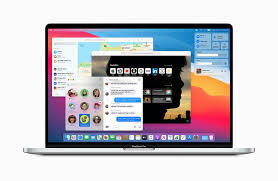
Speaking of forScore coming to the Mac, I continue to hear chatter in the technology community about touchscreen Macs. The design of Apple's forthcoming macOS update, Big Sur, has larger, more spread apart, user interface elements, indicating that it might be getting prepared for touch input. This would align well with Apple's transition to putting their own silicone chips in their devices this year.

I have no idea if Apple is making Macs with touchscreens, but I find it hard to believe they would take their existing Mac laptop and desktop designs and simply make the current screens touchable.

At Apple's developer conference this past June, there were obvious signs that Apple wants developers to adopt design elements from macOS in their iPad apps and vice versa.

Silicone enabled Macs will run touch-first, iOS apps natively, and Apple has been working hard to make their technologies consistent across all platforms. I wouldn't be surprised if touch screen Macs came out of the box with Apple Pencil support. And if Macs have Pencil support, no one wants to awkwardly hold a pencil up in the air in front of them and draw on a horizontal screen.

Here is where I am going with this. With sheet music apps like forScore finally coming to the Mac, and Apple technologies being shared across devices, I am starting to think that I would love a Mac with a display that folded back on its keyboard. Something that I could plug into my audio interface and large screen monitor to edit audio on at home, and then flip onto my podium and read scores off of during band rehearsal. They could charge nearly anything for a 14 inch MacBook Pro in this format and I would buy it.

Who knows if it would be an optimal experience? Who knows if it's what Apple is planning? Who knows if it is anywhere near ready? Not me. It will be very curious to see what happens over the next few months as Apple has announced that some Macs will make this transition by the end of the year.

iOS Music Plugins on the Mac

At WWDC, Apple’s software developer conference last month, they announced that the Mac will be moving to the same chip architecture as iOS devices. One of the many benefits of this move will be that iOS apps will run on the Mac natively.

CDM had an interesting immediate reaction to this news.

The Mac will now have the same chip architecture as an iPad, so what does that mean for us? – CDM Create Digital Music:

Apple’s announcement of moving the Mac from Intel to ARM is no surprise. But here are the details most relevant to your tools – and why we’re in a new era on both the PC and the Mac.

And TL:DR – the change on the Mac platform has a lot to do with Apple’s App Store ecosystem and blending the iPad and Mac platforms. But looking at the big picture, we aren’t so much post-PC as post-Intel. All vendors, not just Apple, are starting to eye chips other than Intel’s even on the x64 architecture.

I am really excited about this possibility for a number of reasons. There are a ton of iOS apps I would love to use the Mac (I am looking at you Tonal Energy and forScore). But then I got thinking about how big and diverse the iOS App Store is, and what some of the edge-case effects of iOS apps on the Mac could be.

Let’s think about audio plugins for a moment. iOS doesn’t have a robust architecture for integrating third party audio apps into larger ones like GarageBand. But it does has a lot of these audio apps. My understanding is that iOS plugins are Audio Units with the .AU extension, just like ones you would install in a DAW on MacOS.

So my assumption is that that an audio app for iOS like Brusfri could run inside of Logic alongside all of your other plugins. This may be a bad example considering Brusfri has a Mac version already but you get the idea.

I think this will only help the Mac. It could be mildly disruptive to the audio plugin market because iOS plugins are so much cheaper than things like, for example, Waves but ultimately, people who want Waves will still buy Waves. I am optimistic that this change will simply mean more apps for everyone, more variety of apps, and more variety of price.