Downie – Ever wished you could save a video from the Internet? Search no more, Downie is what you’re looking for. Easily download videos from thousands of different sites.
Other Rogue Amoeba apps that are indispensable for making content and wrangling audio: Audio Hijack, Loopback, and Soundsource. Check out their education discount.
AirServer app which lets you share an iOS screen to a computer
Podcast episode featuring maker of Audio Hijack, Farrago, Soundsource, and Loopback
Making the Grade is a reoccurring weekly series on 9to5Mac written by Bradley Chambers. It typically features tech analysis concerning Apple’s relationship to education.
I recommend subscribing to 9to5Mac on Twitter or in an RSS app (like Reeder 5) if you are interested in more. Here is a link to a recent article…
In the hours after the WWDC Keynote, there are always little “nuggets” of news that come out that didn’t make the event, but can often be pretty impactful because it can give you an idea of where Apple is moving in the future. When 9to5Mac first spotted the mention of the custom domains in iCloud in the moments after the Keynote, I knew immediately this was the first step to offering this service to schools
forScore has long been my most essential iPad app, and one of the few apps I consider iPad-first. This is to say that it is an app that takes specific advantage of the iPad’s strengths (form factor, pencil support, paper-like display, direct touch input) and leverages them in a way that makes the iPad feel essential.
For the same reasons it is essential on iPad, it has seemed slightly less essential on the iPhone (small screen size is impractical) and Mac (similarly, the design is not easy for direct manipulation, annotation, portability, or sticking on a music stand).
Still, an app this useful screams to be used cross-platform! The more I moved my sheet music library from PDFs on my hard drive to forScore, the more I found I needed to be able to work with the same library structure on my other devices. An iPhone is small, but there are those moments when it is the only device on you and you want to reference something really quickly. In a moment that my iPad battery once failed, I did conduct a percussion ensemble rehearsal from forScore on the iPhone.
In the same way that the iPhone is sometimes useful for being always the one in your pocket, the Mac is also useful sometimes. For example, file management is way easier on a Mac. No matter how many Mac features the iPad adds (drag and drop, Files app, etc.), it is simply not as easy as the Mac. Yes, the iPad can technically do the same things as the Mac in this regard, but it’s slower and more cumbersome. Furthermore, most users know how to use the Finder on Mac but don’t know how to work with the Files app on iPad, even though it is mostly the same these days.
<div class="
      image-block-outer-wrapper
      layout-caption-below
      design-layout-inline
      combination-animation-none
      individual-animation-none
      individual-text-animation-none
    ">


    <figure class="
          sqs-block-image-figure
          intrinsic
        " style="max-width:800px">


      <div class="image-block-wrapper">
        <div class="sqs-image-shape-container-element


          has-aspect-ratio
        " style="position: relative;padding-bottom:75.125%;overflow: hidden">


            <img src="https://images.squarespace-cdn.com/content/v1/5595df9ce4b0ce9ff9ecd1a8/1625925617918-12I7KK37KZGE9QZ2BWRR/CleanShot+2021-07-10+at+09.28.40.gif" alt="It is actually possible to open forScore and the Files app side by side on the iPad. From there, you can drag and drop multiple files at once from one app to another." width="800" height="601" style="display:block;object-fit: cover;width: 100%;height: 100%;object-position: 50% 50%" loading="lazy">

        </div>
      </div>


      <figcaption class="image-caption-wrapper">
        <div class="image-caption"><p class="">It is actually possible to open forScore and the Files app side by side on the iPad. From there, you can drag and drop multiple files at once from one app to another.</p></div>
      </figcaption>


    </figure>


</div>
I’d like to note that a year of teaching (mostly) online has sent me “back to the Mac,” so to speak. The Mac’s efficiency in multitasking, as well as its ability to run streaming apps like OBS and Loopback, has positioned it as my primary work device. Streaming forScore to my iPad’s screen to my Mac using OBS and AirServer is great, but it’s fiddly, indirect, and kills my iPad battery. It has become so much more direct to have forScore running right on the Mac, in the same place my other work is already happening.
<div class="
      image-block-outer-wrapper
      layout-caption-below
      design-layout-inline
      combination-animation-none
      individual-animation-none
      individual-text-animation-none
    ">


    <figure class="
          sqs-block-image-figure
          intrinsic
        " style="max-width:1112px">


      <div class="image-block-wrapper">
        <div class="sqs-image-shape-container-element


          has-aspect-ratio
        " style="position: relative;padding-bottom:69.51438903808594%;overflow: hidden">


            <img src="https://images.squarespace-cdn.com/content/v1/5595df9ce4b0ce9ff9ecd1a8/1625925592095-E3Y17P6LRN6XUVQBSZWX/CleanShot+2021-07-10+at+09.30.44.png" alt="In video conferencing apps like Zoom, I can now share music on the screen with my students directly, thanks to forScore running on my Mac." width="1112" height="773" style="display:block;object-fit: cover;width: 100%;height: 100%;object-position: 50% 50%" loading="lazy">

        </div>
      </div>


      <figcaption class="image-caption-wrapper">
        <div class="image-caption"><p class="">In video conferencing apps like Zoom, I can now share music on the screen with my students directly, thanks to forScore running on my Mac.</p></div>
      </figcaption>


    </figure>


</div>
The wait is over. Actually, it has been over since the fall. With the launch of macOS 11 Big Sur, forScore has released a universal version of their app on the Mac App Store. This means that it will be a free download for those who have purchased the app on iPad.
Note: I wrote most of this review fairly soon after release. Its scope is therefore more like what I would call “First Impressions.” I have been using it all school year long by the time I am actually posting this and think it is now more accurate to call it a review even though I will not be covering every detail comprehensively in the words below.
The goal of this review is to cover what’s unique about the Mac experience. If you want to learn more about forScore’s features, check out this excellent review by David MacDonald
For more on this subject (and speaking of David MacDonald), listen to my podcast review of forScore for Mac, where he was the guest.
Having forScore on the Mac is a huge deal for me. I have been using it aggressively since the fall. It is on a shared screen during every band class and private percussion lesson I teach. Using it right on the Mac is just as easy as I expected.
All of the buttons, knobs, bells, whistles and user interface elements are exactly where you would expect them to be because it looks and feels like the iPad app. I will get into the implications of that in a moment.
Adding music to my library is now a breeze. Until this point, I have been storing all of my scores in a folder in iCloud Drive and then creating duplicate copies in the iPad version of my forScore library. This means that to share music on my Mac’s screen (without doing the AirPlay method above), I have to open the files in PDF Expert. They don’t have any of my indexes, metadata, or attached recordings. I cannot annotate them as I can in forScore, or use music stamps, and I cannot see them in the context of my organized setlist. It is in some ways like maintaining two separate libraries of the same stuff.
To make matters worse, iCloud Drive periodically decides to put some of my scores back in the cloud when I am low on space. When this happens, and I try to open a score from the Spotlight, even a score I used the day before, I will have to wait an extra-long time for my Mac to download the file before actually opening it.
I am happy to report that forScore on the Mac resolves these frustrations. Not only is it lightning-fast for me to get all of the scores that were not in my forScore database inside of it, but scores can also now sync across devices over iCloud. Using keyboard shortcuts like Command+Clicking, Command+Tabbing, and the precision of the keyboard and mouse, allowed me to easily drag and drop most of my remaining digital sheet music library straight into forScore from the Finder. I never pushed forScore too hard in this regard, but at one point, I dragged about 40 scores into forScore from the Finder at once and it handled them with a breeze. This is something the iPad would occasionally crash while trying to do.
<div class="
      image-block-outer-wrapper
      layout-caption-below
      design-layout-inline
      combination-animation-none
      individual-animation-none
      individual-text-animation-none
    ">


    <figure class="
          sqs-block-image-figure
          intrinsic
        " style="max-width:800px">


      <div class="image-block-wrapper">
        <div class="sqs-image-shape-container-element


          has-aspect-ratio
        " style="position: relative;padding-bottom:62.5%;overflow: hidden">


            <img src="https://images.squarespace-cdn.com/content/v1/5595df9ce4b0ce9ff9ecd1a8/1625925693795-EPHCPH8HKUPPQ5MTUC4M/CleanShot+2021-07-10+at+09.23.47.gif" alt="The file import process I showed on the iPad above is far faster and more precise on macOS." width="800" height="500" style="display:block;object-fit: cover;width: 100%;height: 100%;object-position: 50% 50%" loading="lazy">

        </div>
      </div>


      <figcaption class="image-caption-wrapper">
        <div class="image-caption"><p class="">The file import process I showed on the iPad above is far faster and more precise on macOS.</p></div>
      </figcaption>


    </figure>


</div>
Because of this ease, finding duplicated, and deleting them was also easy. So was adding metadata. The Mac is now my preferred tool for doing this kind of logistic work in bulk.
Catalyst
forScore uses Apple’s Catalyst technology which means that Mac apps can share code with iPad apps. Apple introduced this at WWDC in 2019 and in the year that followed, relatively few apps made this transition. A notably good app using this technology is GoodNotes 5. They ditched their native Mac app in version 5 and decided to bring the iPad version over. GoodNotes is a good comparison to forScore, because its strength is, similarly, that it is a touch-first app that feels best when conceptualized as a digital “piece of paper.”
Catalyst apps can be automatically provided to the Mac by the developer with one press of a button, but they won’t be good experiences. Developers can do more work to have the app feel more like it belongs on the Mac, using things like the Touch Bar, custom Tool Bar elements, keyboard shortcuts, etc. The results have been lackluster. Still, having a Mac version of GoodNotes is better than not having one. And because it is an app I usually use on iPad, the need for the Mac version was more for reference.
<div class="
      image-block-outer-wrapper
      layout-caption-below
      design-layout-inline
      combination-animation-none
      individual-animation-none
      individual-text-animation-none
    ">


    <figure class="
          sqs-block-image-figure
          intrinsic
        " style="max-width:2466px">


      <div class="image-block-wrapper">
        <div class="sqs-image-shape-container-element


          has-aspect-ratio
        " style="position: relative;padding-bottom:70.39740753173828%;overflow: hidden">


            <img src="https://images.squarespace-cdn.com/content/v1/5595df9ce4b0ce9ff9ecd1a8/1625925921736-L6THJ0HVCWSCJ3NVTIU4/CleanShot+2021-07-10+at+09.33.20%402x.png" alt="GoodNotes 5 on the Mac. It looks good. But I am constantly forgetting whether to double or single tap on things because it behaves like an iPad app, but I have the conventions of a Mac hardwired into my brain when I am sitting in front of one." width="2466" height="1736" style="display:block;object-fit: cover;width: 100%;height: 100%;object-position: 50% 50%" loading="lazy">

        </div>
      </div>


      <figcaption class="image-caption-wrapper">
        <div class="image-caption"><p class="">GoodNotes 5 on the Mac. It looks good. But I am constantly forgetting whether to double or single tap on things because it behaves like an iPad app, but I have the conventions of a Mac hardwired into my brain when I am sitting in front of one.</p></div>
      </figcaption>


    </figure>


</div>


<div class="
      image-block-outer-wrapper
      layout-caption-below
      design-layout-inline
      combination-animation-none
      individual-animation-none
      individual-text-animation-none
    ">


    <figure class="
          sqs-block-image-figure
          intrinsic
        " style="max-width:2466px">


      <div class="image-block-wrapper">
        <div class="sqs-image-shape-container-element


          has-aspect-ratio
        " style="position: relative;padding-bottom:70.39740753173828%;overflow: hidden">


            <img src="https://images.squarespace-cdn.com/content/v1/5595df9ce4b0ce9ff9ecd1a8/1625925943296-PZECRR7DN8VCHN5QJDL6/CleanShot+2021-07-10+at+09.33.07%402x.png" alt="This is an even weirder example of an iPad toolbar on Mac, but it brings GoodNotes to my Mac, and for that I am grateful." width="2466" height="1736" style="display:block;object-fit: cover;width: 100%;height: 100%;object-position: 50% 50%" loading="lazy">

        </div>
      </div>


      <figcaption class="image-caption-wrapper">
        <div class="image-caption"><p class="">This is an even weirder example of an iPad toolbar on Mac, but it brings GoodNotes to my Mac, and for that I am grateful.</p></div>
      </figcaption>


    </figure>


</div>
At WWDC in 2020, Apple announced that more developer tools would be coming to Catalyst, so that it is easier to bring even more of the things that make Mac apps feel like Mac apps to your iPad version. They also announced that new Macs would be coming out (they shipped on November 17th) with new processors built by Apple. These new machines would be able to run native iOS apps without developers doing anything at all.
Steven Troughton Smith highlights these three methods on Twitter.
I imagine forScore went with the last of those three options for the Mac. Even though it feels like a mostly native experience, some things get weird.
With everything in macOS 11, it’s getting harder to define what Catalyst is. There are 3 forms:
• Unmodified iOS apps (Apple Silicon-only) • Traditional Catalyst apps (more Mac like, but blurry scaling) • Optimized for Mac/Mac Idiom Catalyst apps (pixel perfect, Mac controls)
There are things about forScore on Mac that “look” like the iPad and things that “behave” like the iPad. The things that look like iPad are more forgivable.
For example, the toolbar of an iPad app looks distinct from that of the Mac. Apple is attempting to blur this distinction by redesigning their stock apps to have buttons that are made of thin-lined graphics, rather than appearing as press-able buttons.
<div class="
      image-block-outer-wrapper
      layout-caption-below
      design-layout-inline
      combination-animation-none
      individual-animation-none
      individual-text-animation-none
    ">


    <figure class="
          sqs-block-image-figure
          intrinsic
        " style="max-width:660px">


      <div class="image-block-wrapper">
        <div class="sqs-image-shape-container-element


          has-aspect-ratio
        " style="position: relative;padding-bottom:6.363636016845703%;overflow: hidden">


            <img src="https://images.squarespace-cdn.com/content/v1/5595df9ce4b0ce9ff9ecd1a8/1625927574019-GM7BSBYVSPMU4JVA8HM1/CleanShot+2021-07-10+at+10.26.59.png" alt="The old macOS toolbar used to look like this." width="660" height="42" style="display:block;object-fit: cover;width: 100%;height: 100%;object-position: 50% 50%" loading="lazy">

        </div>
      </div>


      <figcaption class="image-caption-wrapper">
        <div class="image-caption"><p class="">The old macOS toolbar used to look like this.</p></div>
      </figcaption>


    </figure>


</div>


<div class="
      image-block-outer-wrapper
      layout-caption-below
      design-layout-inline
      combination-animation-none
      individual-animation-none
      individual-text-animation-none
    ">


    <figure class="
          sqs-block-image-figure
          intrinsic
        " style="max-width:2184px">


      <div class="image-block-wrapper">
        <div class="sqs-image-shape-container-element


          has-aspect-ratio
        " style="position: relative;padding-bottom:5.6776556968688965%;overflow: hidden">


            <img src="https://images.squarespace-cdn.com/content/v1/5595df9ce4b0ce9ff9ecd1a8/1625926010644-DXF4VPMDVEBHUUU8GOPP/CleanShot+2021-07-10+at+09.34.25%402x.png" alt="By contrast, iOS apps that are brought to the Mac with Catalyst have a toolbar that looks like this." width="2184" height="124" style="display:block;object-fit: cover;width: 100%;height: 100%;object-position: 50% 50%" loading="lazy">

        </div>
      </div>


      <figcaption class="image-caption-wrapper">
        <div class="image-caption"><p class="">By contrast, iOS apps that are brought to the Mac with Catalyst have a toolbar that looks like this.</p></div>
      </figcaption>


    </figure>


</div>


<div class="
      image-block-outer-wrapper
      layout-caption-below
      design-layout-inline
      combination-animation-none
      individual-animation-none
      individual-text-animation-none
    ">


    <figure class="
          sqs-block-image-figure
          intrinsic
        " style="max-width:2318px">


      <div class="image-block-wrapper">
        <div class="sqs-image-shape-container-element


          has-aspect-ratio
        " style="position: relative;padding-bottom:5.780845642089844%;overflow: hidden">


            <img src="https://images.squarespace-cdn.com/content/v1/5595df9ce4b0ce9ff9ecd1a8/1625926023520-5OPPPFE0T935YJ3UJVHZ/CleanShot+2021-07-10+at+09.35.00%402x.png" alt="The new macOS toolbar seeks to blur this distinction by bringing its own toolbar design closer to that of iPad apps." width="2318" height="134" style="display:block;object-fit: cover;width: 100%;height: 100%;object-position: 50% 50%" loading="lazy">

        </div>
      </div>


      <figcaption class="image-caption-wrapper">
        <div class="image-caption"><p class="">The new macOS toolbar seeks to blur this distinction by bringing its own toolbar design closer to that of iPad apps.</p></div>
      </figcaption>


    </figure>


</div>
iOS apps also have different pop-over style elements that feature a Cancel button in the upper left and a Done button in the upper right. These don’t feel Mac-like but they get the job done. You can, for example, still press Escape to dismiss them like you can on a Mac, though the difference in user interface might suggest otherwise.
<div class="
      image-block-outer-wrapper
      layout-caption-below
      design-layout-inline
      combination-animation-none
      individual-animation-none
      individual-text-animation-none
    ">


    <figure class="
          sqs-block-image-figure
          intrinsic
        " style="max-width:1582px">


      <div class="image-block-wrapper">
        <div class="sqs-image-shape-container-element


          has-aspect-ratio
        " style="position: relative;padding-bottom:128.06573486328125%;overflow: hidden">


            <img src="https://images.squarespace-cdn.com/content/v1/5595df9ce4b0ce9ff9ecd1a8/1625926353940-01RZ0O2TIHUM2W052HPV/CleanShot+2021-07-10+at+10.11.24%402x.png" alt="Alerts and settings screens trip me up with Catalyst apps because they really make me feel like I am using an iPad." width="1582" height="2026" style="display:block;object-fit: cover;width: 100%;height: 100%;object-position: 50% 50%" loading="lazy">

        </div>
      </div>


      <figcaption class="image-caption-wrapper">
        <div class="image-caption"><p class="">Alerts and settings screens trip me up with Catalyst apps because they <em>really</em> make me feel like I am using an iPad.</p></div>
      </figcaption>


    </figure>


</div>


<div class="
      image-block-outer-wrapper
      layout-caption-below
      design-layout-inline
      combination-animation-none
      individual-animation-none
      individual-text-animation-none
    ">


    <figure class="
          sqs-block-image-figure
          intrinsic
        " style="max-width:1674px">


      <div class="image-block-wrapper">
        <div class="sqs-image-shape-container-element


          has-aspect-ratio
        " style="position: relative;padding-bottom:71.68458557128906%;overflow: hidden">


            <img src="https://images.squarespace-cdn.com/content/v1/5595df9ce4b0ce9ff9ecd1a8/1625926372271-7XBJJL36WU5ENAIJ9M5M/CleanShot+2021-07-10+at+10.11.46%402x.png" alt="By contrast, here is the user interface of the OmniFocus settings screen, which follows native Mac app conventions." width="1674" height="1200" style="display:block;object-fit: cover;width: 100%;height: 100%;object-position: 50% 50%" loading="lazy">

        </div>
      </div>


      <figcaption class="image-caption-wrapper">
        <div class="image-caption"><p class="">By contrast, here is the user interface of the OmniFocus settings screen, which follows native Mac app conventions.</p></div>
      </figcaption>


    </figure>


</div>
Here are some other details and quirks that highlight the varying degrees of success that forScore has at being Mac-like…
Window resizing
Windows can be resized on Mac. This is implemented pretty well in forScore. When the window is dragged to certain dimensions, the score will automatically decide if it is better to fit one or two pages of the score on the screen. As with an iPad, you can click the book-looking button to the left of the file’s title to force it to keep two pages on screen, regardless of window size. Tools in the toolbar also automatically disappear at smaller window sizes and reappear at larger ones.
<div class="
      image-block-outer-wrapper
      layout-caption-below
      design-layout-inline
      combination-animation-none
      individual-animation-none
      individual-text-animation-none
    ">


    <figure class="
          sqs-block-image-figure
          intrinsic
        " style="max-width:800px">


      <div class="image-block-wrapper">
        <div class="sqs-image-shape-container-element


          has-aspect-ratio
        " style="position: relative;padding-bottom:72.125%;overflow: hidden">


            <img src="https://images.squarespace-cdn.com/content/v1/5595df9ce4b0ce9ff9ecd1a8/1625926073403-R9CJPA55LPPTLYG3XY50/CleanShot+2021-07-10+at+09.36.12.gif" alt="forScore can do things on Mac it can’t do on iPad, like window resizing!" width="800" height="577" style="display:block;object-fit: cover;width: 100%;height: 100%;object-position: 50% 50%" loading="lazy">

        </div>
      </div>


      <figcaption class="image-caption-wrapper">
        <div class="image-caption"><p class="">forScore can do things on Mac it can’t do on iPad, like window resizing!</p></div>
      </figcaption>


    </figure>


</div>
Menu bar
The Mac has the menu bar which exposes (in well-made software) all of the available actions in the app. This helps with discoverability and customization. Users can always find what they want from the menu bar and can set menu bar items as keyboard shortcuts in the System Preferences app. It is nice to see many of forScore’s options in the menu bar, but I am not certain that all of them are there. Fortunately, forScore for Mac has an area in settings that allows you to customize keyboard shortcuts for many of the app’s features.
<div class="
      image-block-outer-wrapper
      layout-caption-below
      design-layout-inline
      combination-animation-none
      individual-animation-none
      individual-text-animation-none
    ">


    <figure class="
          sqs-block-image-figure
          intrinsic
        " style="max-width:983px">


      <div class="image-block-wrapper">
        <div class="sqs-image-shape-container-element


          has-aspect-ratio
        " style="position: relative;padding-bottom:82.80773162841797%;overflow: hidden">


            <img src="https://images.squarespace-cdn.com/content/v1/5595df9ce4b0ce9ff9ecd1a8/1625925996474-FBX5YWUGJMS2ONEK8SDA/CleanShot+2021-07-09+at+09.39.48.png" alt="You can set up custom keyboard shortcuts in forScore." width="983" height="814" style="display:block;object-fit: cover;width: 100%;height: 100%;object-position: 50% 50%" loading="lazy">

        </div>
      </div>


      <figcaption class="image-caption-wrapper">
        <div class="image-caption"><p class="">You can set up custom keyboard shortcuts in forScore.</p></div>
      </figcaption>


    </figure>


</div>
Page navigation
It’s really weird. Simply put, page navigation conventions that work on iPad do not always translate to the Mac. For example, touching and dragging the screen to turn pages is natural when you use your hand to turn the pages, but less so with a keyboard and mouse. Common Mac conventions like two-finger scrolling to swipe pages are implemented in forScore. But other things are weird. Two-finger scrolling feels more natural in other document-based apps like, for example, Preview. In forScore, you can pinch to zoom, but pages that are zoomed in larger than the window size take extra page-turning gestures to navigate. This if because forScore’s default behavior when you swipe is to show you whatever of the page is not on the display. This makes sense because in a performance you might want to zoom in closer to the music. When doing this, it makes sense that a one-touch gesture reveals the next part of the music (regardless of what page it is on), but in practice, this is not Mac-like. Any other app that deals with PDFs would show me the next page when I do the page turn gesture. This quirk is particularly weird if your score is just a few pixels taller than the window size you have set. Turning the page takes two swipes instead of one. The first swipe awkwardly jolts the screen down just enough to see the few missing pixels at the bottom of the screen, and the next swipe actually turns the page.
<div class="
      image-block-outer-wrapper
      layout-caption-below
      design-layout-inline
      combination-animation-none
      individual-animation-none
      individual-text-animation-none
    ">


    <figure class="
          sqs-block-image-figure
          intrinsic
        " style="max-width:625px">


      <div class="image-block-wrapper">
        <div class="sqs-image-shape-container-element


          has-aspect-ratio
        " style="position: relative;padding-bottom:128%;overflow: hidden">


            <img src="https://images.squarespace-cdn.com/content/v1/5595df9ce4b0ce9ff9ecd1a8/1625926106078-YBOGTZI6YTS3LX4EQURA/CleanShot+2021-07-10+at+09.40.48.gif" alt="When my window is just too short, I have to turn the page twice, to turn it once. These kinds of quirks aren’t terrible, but when you encounter them, it’s easy to perceive the app as broken or untrustworthy." width="625" height="800" style="display:block;object-fit: cover;width: 100%;height: 100%;object-position: 50% 50%" loading="lazy">

        </div>
      </div>


      <figcaption class="image-caption-wrapper">
        <div class="image-caption"><p class="">When my window is just too short, I have to turn the page twice, to turn it once. These kinds of quirks aren’t terrible, but when you encounter them, it’s easy to perceive the app as broken or untrustworthy.</p></div>
      </figcaption>


    </figure>


</div>
Zooming in and out
The above-mentioned quirk is even weirder when you have zoomed in a lot. I do this often to focus my students on a particular excerpt of music. When scrolled in, there is (to my knowledge) no way to keep scrolling from the trackpad. You have to zoom out, turn the page, and then zoom in again. Contrast this with Preview, a native Mac app, which will just let me scroll freely through the document, no matter how far I have zoomed in.
Spotlight!
I am pleased to say that searching for score files in Spotlight (Command+Spacebar) results in all my scores showing up, even chapter titles in an index of a larger score.
Mac apps tend to have sidebars that reveal list views and top-levels of organization hierarchy in an app. These can often be toggled on and off though I usually leave them on so I can get to things more quickly. forScore on the Mac supports the option to keep the sidebar permanently visible, so you can always see your library alongside whatever score is selected. Cool.
<div class="
      image-block-outer-wrapper
      layout-caption-below
      design-layout-inline
      combination-animation-none
      individual-animation-none
      individual-text-animation-none
    ">


    <figure class="
          sqs-block-image-figure
          intrinsic
        " style="max-width:3360px">


      <div class="image-block-wrapper">
        <div class="sqs-image-shape-container-element


          has-aspect-ratio
        " style="position: relative;padding-bottom:62.5%;overflow: hidden">


            <img src="https://images.squarespace-cdn.com/content/v1/5595df9ce4b0ce9ff9ecd1a8/1625928115026-OIGE0M403046LJKCTLEJ/CleanShot+2021-07-10+at+09.19.11%402x.png" alt="I like that the Mac version of forScore supports a permanently-visible left sidebar. I wouldn’t mind this feature on my 12.9 inch iPad Pro." width="3360" height="2100" style="display:block;object-fit: cover;width: 100%;height: 100%;object-position: 50% 50%" loading="lazy">

        </div>
      </div>


      <figcaption class="image-caption-wrapper">
        <div class="image-caption"><p class="">I like that the Mac version of forScore supports a permanently-visible left sidebar. I wouldn’t mind this feature on my 12.9 inch iPad Pro.</p></div>
      </figcaption>


    </figure>


</div>
Conclusion
There are of course more Mac-like things to celebrate and more iPad-like things to question, but the bottom line is this: forScore is an app loved by musicians all over, and it is completely stellar that the developers dedicated time to bringing this application over. It is unknown if it would ever have happened without Apple’s Catalyst technology, but because of it, we get to have a pretty ok Mac app, where we otherwise would not. And having a pretty ok Mac version of an indispensable iPad app is… actually great! So thank you forScore team!
There are certainly more Mac apps that I would love to see on iOS than there are iOS apps I would like to see on the Mac, but the list is getting smaller.
Earlier in the summer I started a Patreon to gather some support for this blog and podcast. One of the perks that all levels get is to join the Music Ed Tech Talk Discord server where you can talk all about your favorite music, tech, and teaching practices.
So far I have a few supporters and there has been some pretty lively discussion, particularly about the subject of grading.
Some members of the Discord decided to read Ungrading together. Ungrading is a collection of short writings by teachers who have, in varying ways, decided to eliminate some (or all) of the grading from their teaching. It sounds extreme. But so far I am finding it more practical than expected. There is a lot you can take or leave from it.
We are running a public summer book club to talk about it. The book club is going to meet over the next month or so on Wednesday’s at 8:30 pm EST. We tried it on Twitter Spaces last week with some amount of success and are going to try it on Clubhouse this coming Wednesday to see if it is a better and more engaging experience.
You do not need to be a member of my Discord to join the conversation or listen in. However, Clubhouse does require an invite. If you need one, let me know.
Here is a link to the book. Below is a link to the Clubhouse discussion.
Round 1 of my summer book club had some weirdnesses on Twitter Spaces so we are experimenting with Clubhouse next week.
DM me for invites.
“Summer Book Club: UNgrading” with Music Ed Tech Talk. Wednesday, Jul 14 at 8:30 PM EDT on @clubhouse. Join us! https://t.co/F0ZQDxykx3
I aspire to write more about my smart home setup here but doing so requires a style of writing that doesn’t always come easily for me. So I decided to podcast about it. Scroll below to hear my recent conversation with David MacDonald about how I set up my smart speakers. Click here to learn about my favorite smart home devices.
Episode Description:
Robby and David (music composition, theory, and technology teacher at the Wichita State University) compare smart speakers, their assistants, and their smart home ecosystems. This episode covers the HomePod, Google Nest, Amazon Echo, Siri, Alexa, Google Assistant, Sonos speakers, and the various quirks that result from trying to use them in combination.
Backstage Access Patreon supporters get extended conversation about Apple Notes, DEVONthink, Standard Music Font Layout compatibility, FileMaker databases, student motivation, grading (and ungrading), and sticker charts.
Check out the update to MusGlyphs, a font for typing music symbols into a word processor. Scoring Notes has the details. Click to read their writeup below.
MusGlyphs has been updated to version 2.1. MusGlyphs is the font by Dan Kreider that makes it easier to type a wide variety of musical symbols directly into a word processor, combined with text fonts, without needing to adjust baselines or point sizes.
Among the notable improvements in this version is the addition of MusGlyphs Text, a version of MusGlyphs with regular and bold variants that allows the user to type ordinary text and musical symbols without needing to switch between two different fonts.
This isn’t something I have used a ton but I am excited to check this version out in more detail. It could be really useful for making music worksheets in a word processor like Pages or Word. Unfortunately, Google Docs (to my knowledge) still has terrible support for third party fonts.
Apple’s forthcoming fall operating system updates became available in a public beta on Wednesday. I like to stay up to date on what I will do with my computers each fall and these new updates feature a ton of productivity boosts. Naturally, I chose to dive in.
For now, I have installed just the iOS 15 beta on my iPad. It is a low-stakes device for me, and I am most dependent on it for using forScore in rehearsal and concerts (the official releases will have shipped by my next concerts). I have also read that these betas are relatively stable, but anything is possible, so if you do this (which I don’t recommend), make sure you backup your data!
There are a few productivity features I immediately began experimenting with.
Widgets on the Home Screen
The iPad now allows you to put widgets anywhere on the home screen. I am trying an experiment that strips most of the apps off the main page and instead makes a productivity dashboard. It’s pretty nice!
You can design your own contextual Do Not Disturb modes on iOS 15. Each focus allows you to decide…
Which apps can be used
Which contacts can notify you
What your home screen looks like
And more
I set up the default Personal and Work focus modes that come built into the OS. My thinking for these is that Personal focus will be similar to regular Do Not Disturb but will only allow close family to text me. Work focus I set up to only allow notifications from email and Slack and limited it to only apps I use for doing logistic desk work and advancing projects.
Here is where things get fun. I created a Rehearsal Focus mode that shuts off access to all apps except the ones I use in rehearsal. It only allows members of my music team to reach me. It is designed to help me stay focused while teaching.
I haven’t done much with customizing the home screen in these various modes of focus yet, but I imagine the automation potential to be huge.
A TON of new Shortcuts actions are available to all operating systems (and the Mac is getting the Shortcuts app in this update!)
Shortcuts isn’t as powerful in my work life as it is in my personal life because most of my music and education apps have insufficient (or no) Shortcuts support. But that doesn’t mean I can’t trim tons of time eliminating the friction of iPad multitasking.
In most rehearsals, I open the same apps and files on screen. Now, with a one-tap Shortcut, I can have my iPad go into the new Rehearsal Focus mode, open forScore on the left, GoodNotes on the right (with a blank new note I can use as a digital white board), and a Tonal Energy Tuner app in Slide-Over. Now, if only forScore would add Shortcuts support so I can program it to open a specific score!
See it in action below. Then imagine how long it would take you to set up manually while you have 60-100 band kids entering the room and demanding your attention.
There are a handful of music shows that are in my regular rotation. They span the topics of performance, conducting, theory, musicology, and pedagogy
Sticky Notes: The Classical Music Podcast
Great show for people who want to learn more about classical music, regardless of experience level with it.
Sound Expertise
Will Robin has conversations with scholars about music. This show goes deep, but I find it really approachable no matter how much experience you have with the weekly topic.
The Third Story
Leo Sidran hosts long-form interviews with musicians from various backgrounds. I particularly enjoyed the interviews with Cory Henry, Becca Stevens Louis Cole.
He really gets the guests to open up and reveal their humanity, intimate accounts of their life experiences, and creative journey.
The Brass Junkies
This is one of the few instrumental music education shows that doesn’t feel like the air has been sucked from the room when I listen.
This show features candid, personal, conversations with brass musicians from all over, about their professional journey and pedagogy.
Everything Band Podcast
Mark J. Connor does an excellent job interviewing band teachers, performers, and composers of music for winds and percussion.
UpBeat
This is an awesome podcast about conducting, with great industry advise and interviews with conductors from all over.
I may be a little biased because I went to school with one of the hosts, John Devlin.
The show is great and the parody ads are hilarious.
Summer is a nice time to take a break and relax, but Google has instead been busy working on new updates and features for schools.
On June 22nd Google hosted their “Anywhere School 2021” event (http://goo.gle/tas21) where they covered loads of announcements concerning 40 updates for Google Classroom, Google Meet, Chrome and Chromebooks, and Google Workspace tools in general.
In case you missed it, or are just trying to review through everything that was shared, see below for a list of all 40 updates that were shared at the event.
On the one hand, many of these features looks great (especially the education streaming feature with YouTube/Google Meet). On the other hand, it is easy to see that some of these features are born out of the needs of virtual/hybrid learning and may not be as useful as schools potentially return to in-person instruction this fall.
That said, it looks like there is plenty in store for Google Classroom users, no matter what teaching environment you may find yourself in this fall.
A few weeks back, I wrote and podcasted about getting my general music classes to compose, make beats, write, and remix songs this past school year. Read and listen to that here.
I am thrilled to report that I also got my band students to compose for the first time this past year, with very good results. I used composer Alex Shapiro’s Putting the E in Ensemble curriculum (linked below). I am so inspired by her music, approach to composition, and general awesomeness that I invited her on my podcast. The conversation was an inspiration and a delight.
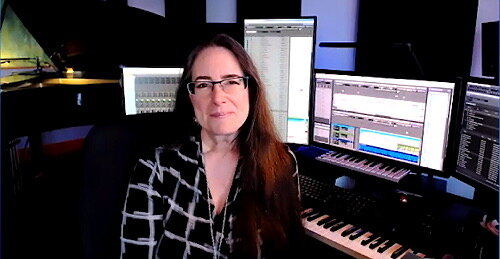
Listen to the episode and follow my podcast below. Keep scrolling through this post to see photos of Alex’s amazing recording space and to listen to some examples of my student’s compositions that resulted from using this curriculum.
Episode Description: Composer Alex Shapiro joins the show to talk about getting young students to compose, the importance of composing repertoire for young musicians, writing electro-acoustic music, Putting the E in Ensemble, future tech, and her amazing studio space. Join Patreon for extended conversation about technology and overcoming blocks in the creative process.







 Music Ed Tech Talk
You must be logged in to post a comment.